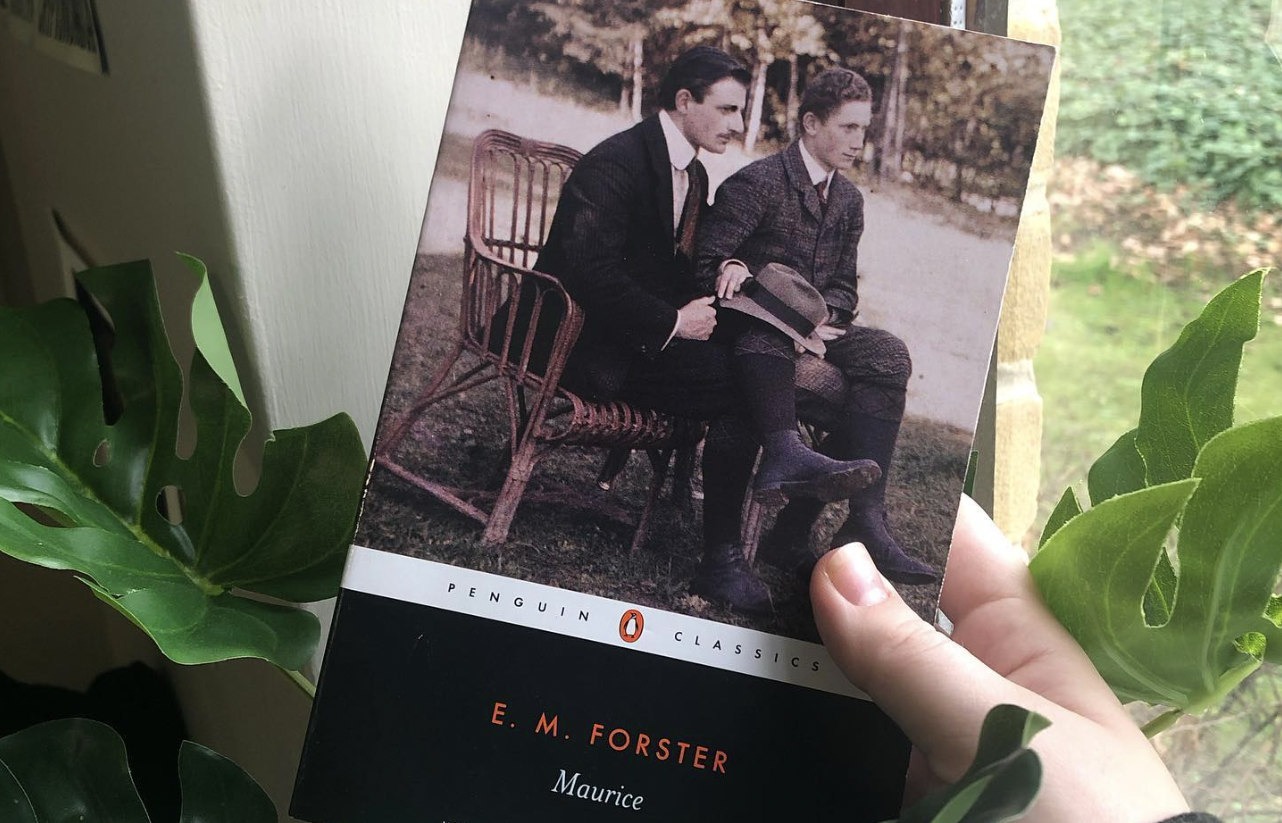
Maurice by E.M. Forster
I was deep in my MA in Publishing and talking about books all the time with everyone constantly when I decided to review Maurice on Instagram, in January of 2021. There wasn’t any particular reason—it just happened to be the book I was reading when I decided I wanted to share my thoughts about books more easily than texting all my friends individually.
I found the book very relatable at the time, as it follows Maurice Hall between the ages of 14 and 24, with the majority of the book taking place when he’s about 23. And, in January of 2021 when I read the book, that’s exactly how old I was (writing this, I’m about to turn 27). I found that I could connect very easily with Maurice’s internal narrative, from his melodramatics to bouts of depression, because it mirrored my own internal monologue some days.
At times he bounced back and forth between extreme emotions, changing his mind and demeanour as it suited him. He’s a deeply flawed character, but in a way that is easy to find relatable if you can recognize similar personality flaws within yourself. He doesn’t mean poorly, most of the time, he’s just young.
The plot of the book, as I remember it, mostly follows Maurice through his university studies. There are some dealings with his sister and her potential marriage candidates, but it’s fundamentally a campus novel. The two major subversive pieces of this book are the fact that’s gay, and that the man Maurice falls for is lower class. Because of that, this book didn’t come out until almost 60 years after it was written—having first been published in 1971, even though Forster wrote it in 1913.
It’s an early work to feature a gay happy ending, making it a historically important novel for learning about the history of gay literature in a way that doesn’t condemn gay love. While the pace of the book is slow, it’s a steady read that provides a vulnerable exploration of love and self-acceptance in your early twenties.
You confuse what’s important with what’s impressive.