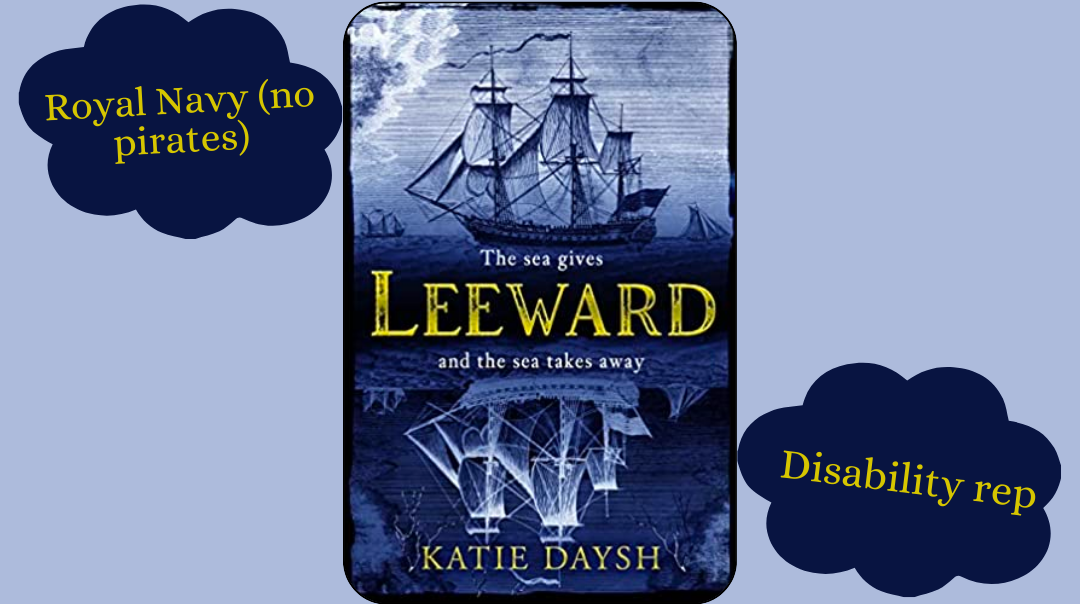
Leeward by Katie Daysh
By the time this is posted to Instagram I will have hopefully bought the sequel, though likely not have had time to read it yet. I do think that the sequel will affect some of the ways I think about certain aspects of this book, because there’s a few areas I think Daysh didn’t go as deep into as I would’ve liked. But that could all change in the sequel, easily.
I really didn’t expect to like this book as much as I ended up enjoying it. It was nominated as a Buddy Read in the Reading Rainbow discord group and there was a long wait for it at the library (it’s mostly available in eBook format) and so I just watched everyone else read it. They liked it, but I didn’t think that I would. I was very wrong about that. I’m very glad that I ended up choosing it to fulfill a Reading Bingo square about seafaring books, because this was a very fun and well-paced adventure.
Throughout reading the book, I kept joking that I was getting a lot of Black Sails vibes from this, and I stand by that after reading. If you liked that show, you’ll enjoy this book. The book isn’t quite as brutal and bloody as certain parts of Black Sails, but it’s much closer to that in tone than other popular pirate shows at the moment.
I’m not really a naval history buff, shocking no one, but my dad is (also shocking no one, if you’ve ever met him), so I also got to ask him about parts of ships and the culture of Royal Navy in the 18th/19th century, which was very fun.
The part that Daysh didn’t go into as deeply as I would’ve liked was the topic of disability. The main character suffers an injury in the first chapter (before a jump forwards in time) that leaves him visually impaired. This is touched on a few times, especially in flashbacks to the time between the accident and the main plot of the book, but I still wish that it was explored more thoroughly. With the overall themes of self-acceptance in the book, I do hope that it will come up in the sequel, so I’ll just have to wait and see.
He could not expect the seat to grant him freedom when he would never allow himself to have it.