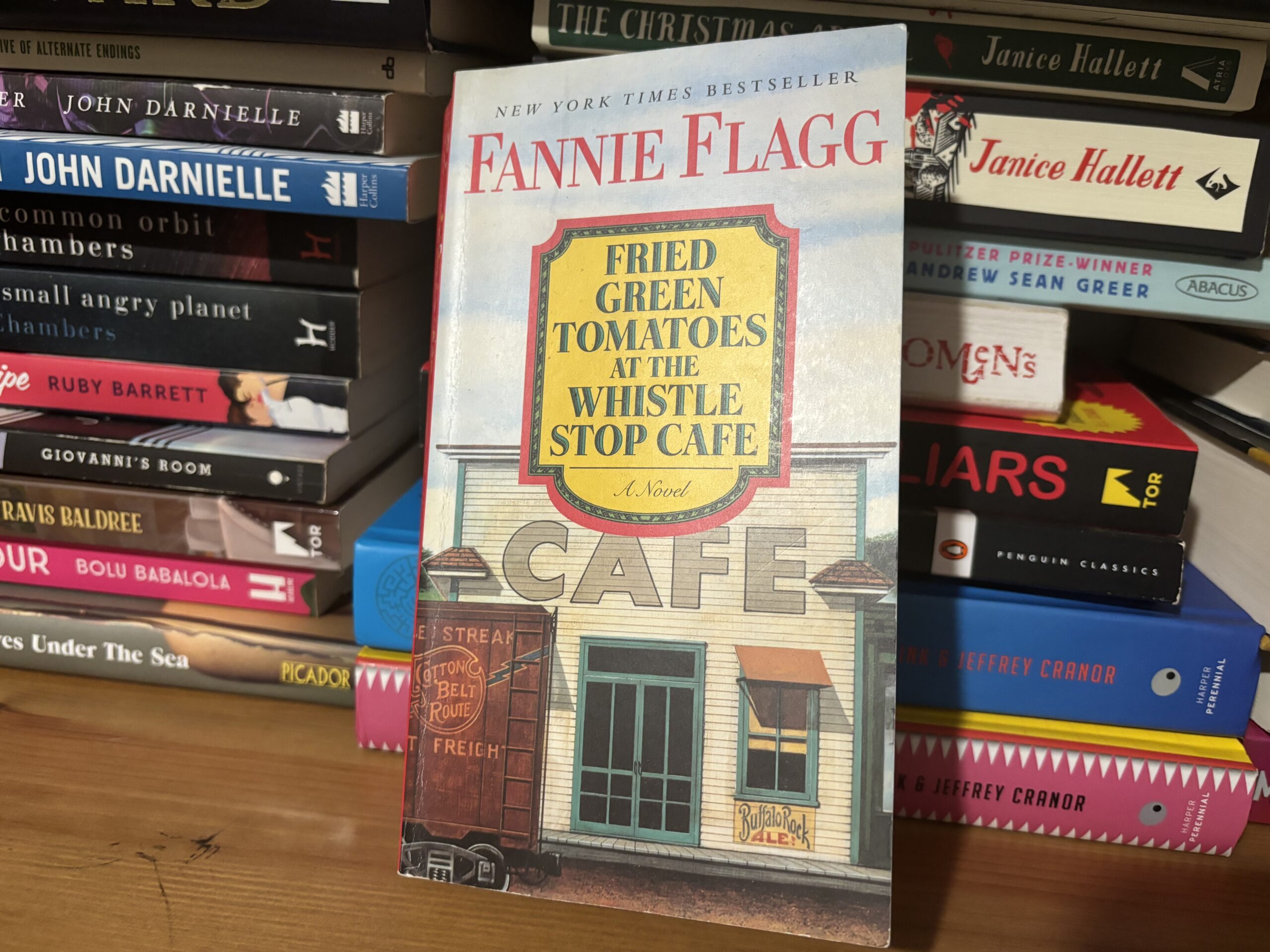
Fried Green Tomatoes at the Whistle Stop Cafe by Fannie Flagg
I’ve wanted to read Fried Green Tomatoes for a long time, mostly for its historical significance, and I was surprised by the wide variety of topics the book covered. Unfortunately, that was sometimes to the books detriment, especially in the ‘present day’ scenes with Evelyn and Ninny. (Why did Evelyn join a multi-level marketing scheme??? I guess it was the 80s).
This book uses the framing device of Ninny, an old woman, telling stories about the Threadgoode family which she married into, to Evelyn, a woman in her 40s who’s lost her way and is at the retirement home to visit her mother-in-law. I enjoyed how Ninny talked about aging as well as the fact that Evelyn is allowed a second lease on life after this experience, solidifying themes of second chances that are present throughout the book.
Ninny mostly tells the stories of Idgie Threadgoode, the youngest child of the family, and her long-term partner Ruth, with whom she ran the titular Whistlestop cafe. The book moves between the years, between their adult lives and when they were children and young adults. The most interesting thing, to me, was about how what was clearly a lesbian relationship was depicted in a book released in the 80s and taking place largely in the 20s and 30s. There were ways in which the book was very obvious – outright stating that Idgie was in love with Ruth when they first met as teenagers – but it wasn’t acknowledged outright at other places.
This book also contained a lot of what I might call ‘period typical racism’, but I’m not sure if that period is the 20s or the 80s. I’m a bit too young to know if this book was seen as being any amount of progressive (or even just normal) in the 80s, or if the way Black characters were written would’ve been seen as racist at the time. I’d be interested to know what the contemporary reactions to this book were, in general.
“You know, a heart can be broken, but it keeps on beating, just the same.”